
Observable Science as Simple System Models
Home science experiments are simplified physical models that demonstrate how scientific systems behave under controlled, observable conditions. They are not demonstrations of isolated facts, but structured ways to observe underlying principles in physics, chemistry, and biology.
Where Observation Fits in Science Deconvolution
Science Deconvolution is structured around three layers of understanding:
- Conceptual understanding (Master Science Concepts)
- Structured learning (Lecture Sets Index)
- Observable systems (Home Experiments)
This page represents the observable layer.
It connects abstract scientific principles to real-world behaviour using simple, accessible experiments.
What Home Experiments Actually Represent
Home experiments are not designed as demonstrations of “fun science.”
They are:
- Reduced-scale physical systems
- Simplified models of real-world interactions
- Controlled environments for observing system behaviour
- Entry points into deeper scientific interpretation
Each experiment reveals how a system behaves under variation in conditions.
How to Read These Experiments
Each experiment follows a consistent interpretive structure:
- System type (what category of behaviour is being observed)
- Observed behaviour (what physically happens)
- Underlying mechanism (why it happens at a system level)
- Concept link (what scientific principle it represents)
The focus is not on repetition, but on recognising patterns across systems.
Core System Categories (Home Experiments)
These categories organise all current and future experiments.
They are intentionally stable and limited to maintain clarity.
1. Physical Systems
Experiments that show how matter behaves under force, density, motion, and structural constraints.
Typical behaviours:
- Buoyancy shifts
- Density separation
- Motion under force
- Equilibrium formation
-

Understanding Buoyancy: Why Objects Float or Sink
-

Simple Science Explanations: What is dark matter, and why can’t we see it?
-
Oversimplified Example: Understanding Weight Distribution in Bags


2. Chemical Systems
Experiments that show the transformation of substances through interaction.
Typical behaviours:
- Gas formation
- Reaction-driven energy release
- Molecular restructuring
- Equilibrium shifts
-
Understanding Solubility: A Dynamic Molecular System
-
Oversimplified Example: Understanding Gas Escape in Carbonated Beverages


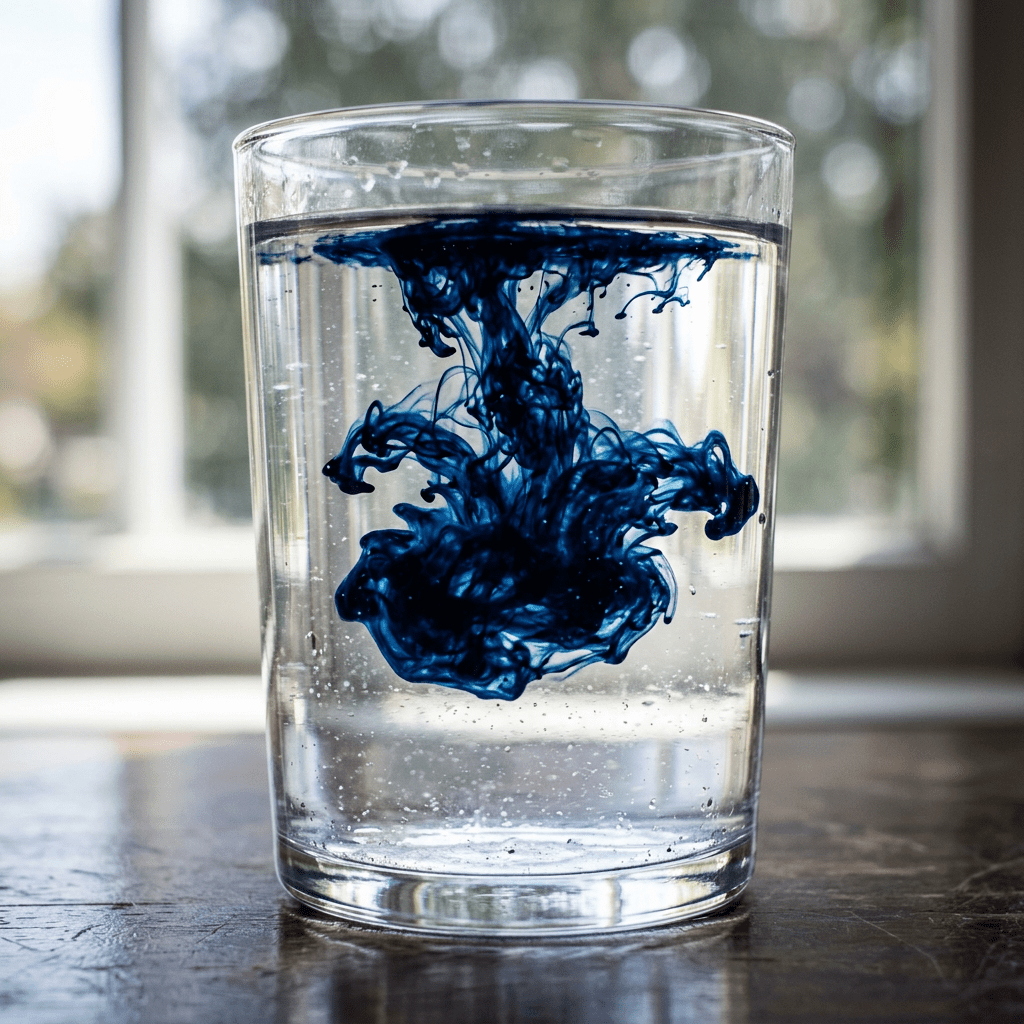
3. Fluid and Transport Systems
Experiments that show how liquids and materials move through environments.
Typical behaviours:
- Capillary action
- Passive fluid flow
- Layering and separation
- Pressure-driven movement
-
Understanding Diffusion: The Science of Particle Movement
-
Oversimplified Example: Understanding Liquid Speed in Simple Experiments

4. Energy and Field Systems
Experiments that show invisible forces and energy interactions.
Typical behaviours:
- Static charge effects
- Magnetic field structures
- Light refraction
- Wave propagation
-
Understanding Electrostatic Charge and Its Effects
-
Oversimplified Example: Understanding Human Conductivity in Modern Devices


5. Biological Response Systems
Experiments that show adaptive responses in living systems.
Typical behaviours:
- Stimulus-response behaviour
- Directional growth
- Environmental adaptation
- Feedback loops
-
Oversimplified Example: Testing Human Response Time Under Pressure

Why This Matters in Science Deconvolution
In this framework, experiments are not isolated activities.
They are:
observable manifestations of underlying system behaviour
This means each experiment is part of a larger interpretive structure that connects:
- Physical observation
- Conceptual explanation
- System-level reasoning
How This Page Connects to the System
This page is one layer of a structured knowledge model:
Layer 1: Concepts
Understanding how systems work
→ https:// Science Deconvolution.com/master-science-concepts-quickly/
Layer 2: Structure
Organised scientific learning
→ https:// Science Deconvolution.com/lecture-sets-index/
Layer 3: Observation
Real-world system behaviour
→ This page
Core Principle
Science is not a collection of experiments.
It is the study of how systems behave consistently under changing conditions.
Home experiments simply make those behaviours visible in simplified form.
Why This Approach Is Different
Most home science experiment resources focus on:
- Step-by-step instructions
- Visual outcomes
- Simplified explanations for demonstration purposes
Examples of these formats include:
- https://www.sciencebuddies.org/
- https://www.bbc.co.uk/bitesize
- https://www.nationalgeographic.com/science/
These are valuable educational resources, but they typically present experiments as isolated activities.
Final Note
This page will expand over time as new experiments are added.
Each new experiment will:
- Fit into a system category
- Link back to this hub
- Reinforce the broader science deconvolution framework
