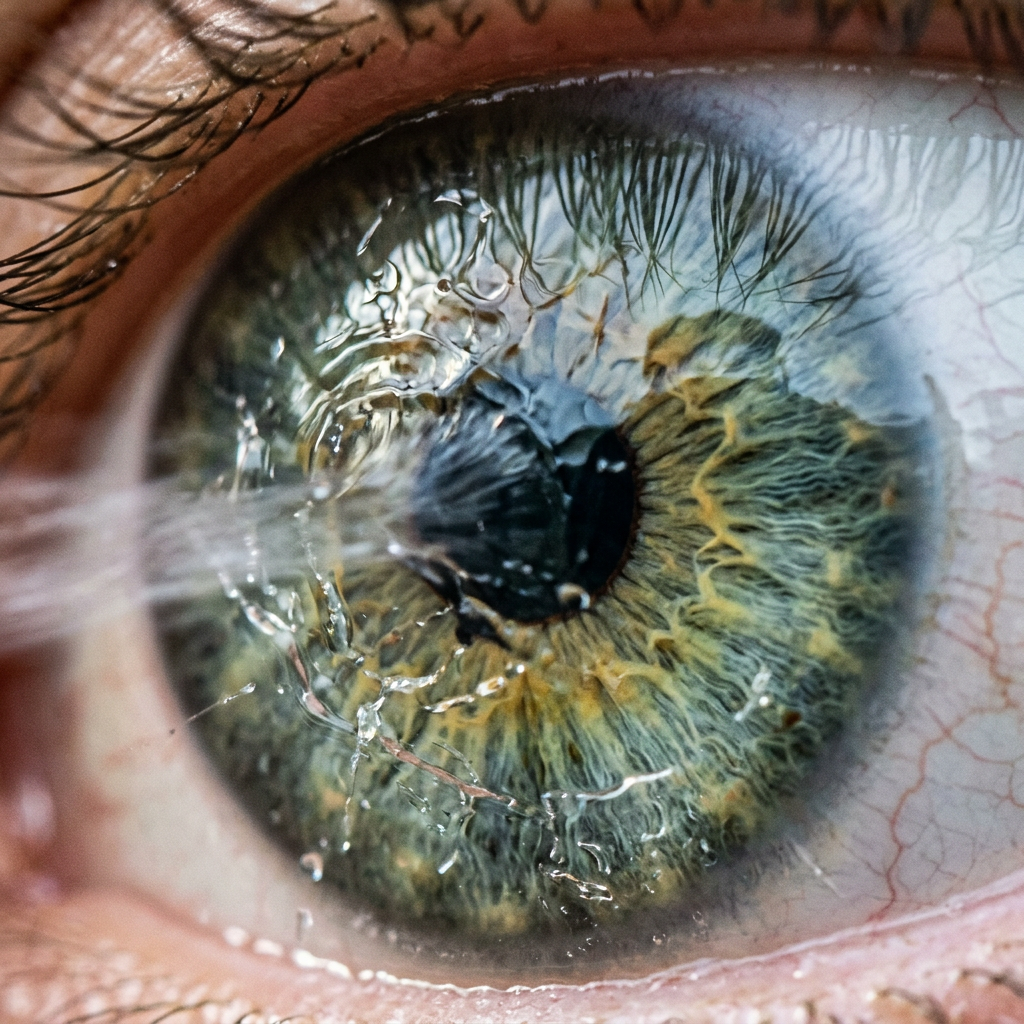
What it is
When wind hits your eyes, they often start producing tears even if you are not emotional or upset.
How it works
Your eyes are covered by a thin tear film that keeps them:
- Moist
- Smooth
- Protected from dust and damage
Wind disrupts this protective layer in several ways.
1. Wind increases evaporation
Moving air strips moisture away from the eye surface faster than normal.
This causes:
- Drying of the cornea
- Irritation of surface nerves
- Instability in the tear film
The brain interprets this as:
“The eye surface protection is dropping”
2. Reflex tear production activates
Tiny nerves on the eye surface signal the lacrimal glands (tear glands) to produce extra tears.
This is an automatic protection reflex designed to:
- Re-lubricate the eye
- Wash away irritants
- Restore the tear film
So watery eyes are actually:
An emergency moisture replacement system
3. Wind also carries particles
Dust, pollen, and tiny debris in moving air can irritate the eye surface further.
This amplifies tear production because the eye assumes:
- Contamination risk
- Potential surface damage
4. Cold wind makes it worse
Cold air:
- Holds less moisture
- Dries the eye faster
- Can slightly narrow oil glands that stabilise tears
So, the tear film breaks apart more easily.
Why it matters
This explains:
- Watery eyes while cycling or walking in the wind
- Why dry-eye sufferers react more strongly
- Why sunglasses reduce eye watering outdoors
- Why tears can happen even when eyes feel “dry”
Simple analogy
It’s like wind blowing across a wet surface too quickly; the moisture layer evaporates faster than normal, so the system turns on automatic sprinklers to replace it.