

The skills you need to understand, explain, and apply organic chemistry with confidence.
C9 is one of the most content‑dense, application‑heavy, and exam‑favourite topics in GCSE Chemistry. Students learn how crude oil is separated, how hydrocarbons behave, how alkanes and alkenes differ, how cracking works, and how polymers are formed. The C‑Series version teaches students to think in carbon chains: how structure determines properties, reactivity, and real‑world uses.
What C9 Helps You, Master
1. Crude Oil, Hydrocarbons & Fractions
Students learn:
- Crude oil = mixture of hydrocarbons
- Hydrocarbons = molecules made of hydrogen + carbon only
- Fractions are separated by fractional distillation
- Each fraction has a different boiling point
Higher Tier adds:
- Why boiling point increases with chain length
- How intermolecular forces affect volatility and viscosity
Mastery links structure → intermolecular forces → real‑world uses.
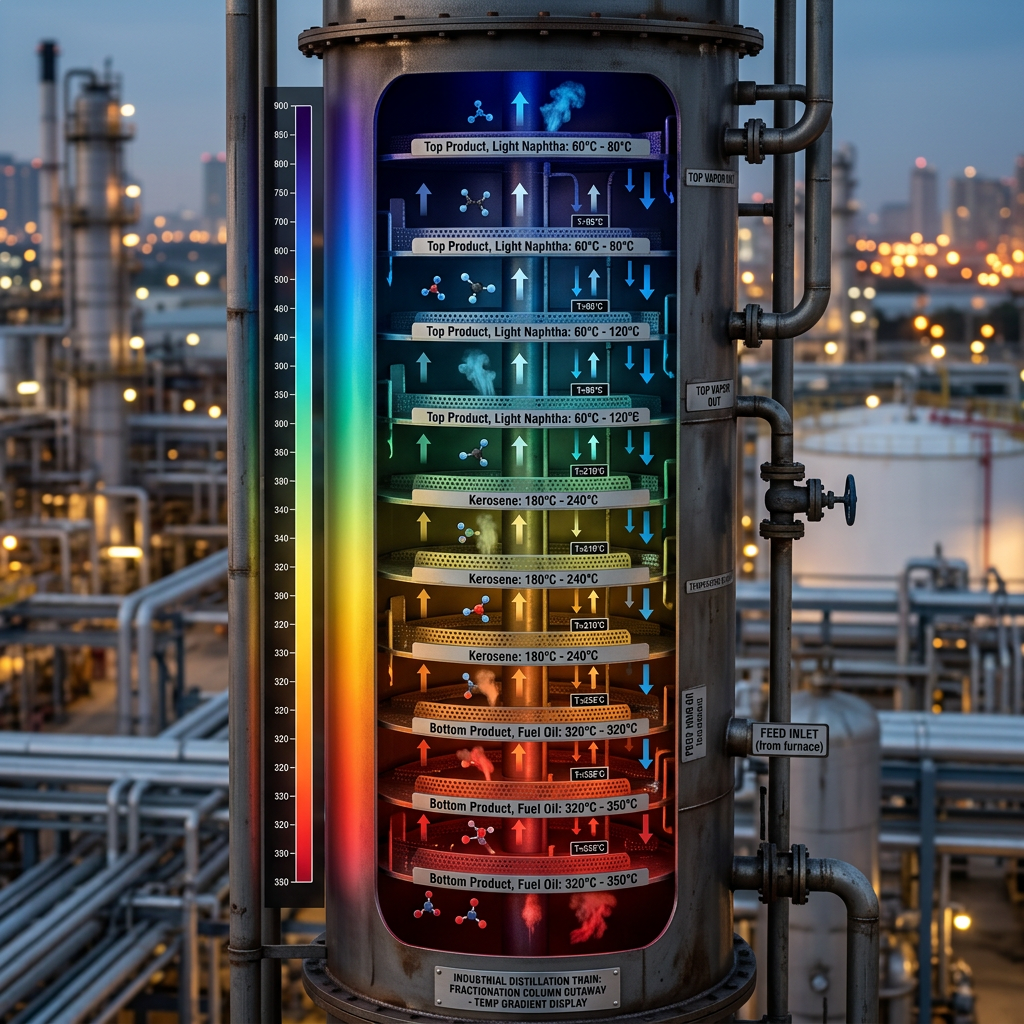
2. Fractional Distillation Explained
Students learn:
- Crude oil heated → vapours rise
- The column is hotter at the bottom, cooler at the top
- Long chains condense low down
- Short chains condense higher up
Higher Tier adds:
- Energy needed to overcome intermolecular forces
- Why fractions have different boiling ranges
Mastery teaches students to justify separation using molecular reasoning.
3. Alkanes: Saturated Hydrocarbons
Students learn:
- General formula: CₙH₂ₙ₊₂
- Single bonds only (saturated)
- Examples: methane, ethane, propane, butane
- Complete combustion → CO₂ + H₂O
Higher Tier adds:
- Balancing combustion equations
- Interpreting molecular and structural formulae
Mastery links chain length → boiling point → flammability.
4. Alkenes: Unsaturated Hydrocarbons (Higher Tier)
Students learn:
- General formula: CₙH₂ₙ
- Contains a C=C double bond
- More reactive than alkanes
Higher Tier adds:
- Addition reactions
- Testing for alkenes with bromine water (orange → colourless)
- Drawing displayed formulae
Mastery teaches students to predict addition products.
5. Cracking: Making Useful Hydrocarbons
Students learn:
- Long chains → cracked into shorter, more useful molecules
- Produces alkanes + alkenes
- Two types:
- Catalytic cracking
- Steam cracking
Higher Tier adds:
- Why cracking is needed (demand for short chains)
- Conditions for cracking
- Interpreting cracking equations
Mastery links cracking → supply/demand → industrial chemistry.
6. Combustion & Incomplete Combustion
Students learn:
- Complete combustion → CO₂ + H₂O
- Incomplete combustion → CO + C + H₂O
Higher Tier adds:
- Dangers of carbon monoxide
- Soot formation
- Evaluating combustion efficiency
Mastery teaches students to justify combustion outcomes using oxygen availability.
7. Polymers (Higher Tier Extension)
Students learn:
- Addition polymers form from alkenes
- Monomers → polymer chains
- Repeating unit diagrams
Higher Tier adds:
- Interpreting polymer structures
- Identifying monomers from polymer diagrams
Mastery links polymer structure → properties → uses.
8. Avoiding Common Misconceptions
C9 highlights the mistakes examiners see every year:
- “Crude oil is a compound” (it’s a mixture)
- “Alkanes decolourise bromine water” (only alkenes do)
- “Cracking produces only alkanes” (it produces alkanes + alkenes)
- “Double bonds make alkenes saturated” (they make them unsaturated)
- “Fractional distillation separates by density” (it separates by boiling point)
Fixing these earns easy marks.
9. Building Exam‑Ready Explanations
Mastery Tier teaches students how to:
- Explain fractional distillation using energy + forces
- Compare alkanes and alkenes
- Justify cracking using supply/demand
- Interpret polymer diagrams
- Write full, structured 4–6 mark answers
This is where Grades 8–9 are earned.
Why C9 Matters
Crude Oil & Organic Chemistry underpin fuels, materials, plastics, and industrial chemistry. C9 gives students the skills to:
- Classify hydrocarbons
- Explain fractional distillation
- Compare alkanes and alkenes
- Understand cracking and polymers
- Write high‑quality, long answers
It turns organic chemistry from “lots of names” into a logical, structural system.
What Comes Next
C9 is the ninth block in the C‑Series. Next, you’ll move into:
- C10 – Chemical Analysis
- C11 – The Atmosphere
- C12 – Using Resources
Each one builds the exam‑ready reasoning students need across the whole course.
GCSE Chemistry Complete Exam Pack Coming Soon
The full GCSE Chemistry Complete Exam Pack (300+ exam questions, full mark schemes, worked solutions, higher‑tier questions, and printable worksheets) will be released once all Chemistry exam‑question posts are complete.
This ensures:
- Every topic is fully covered
- Every question matches the final structure
- Every mark scheme is consistent
- The pack is complete, polished, and exam‑ready
Updates will be posted on the Chemistry hub.