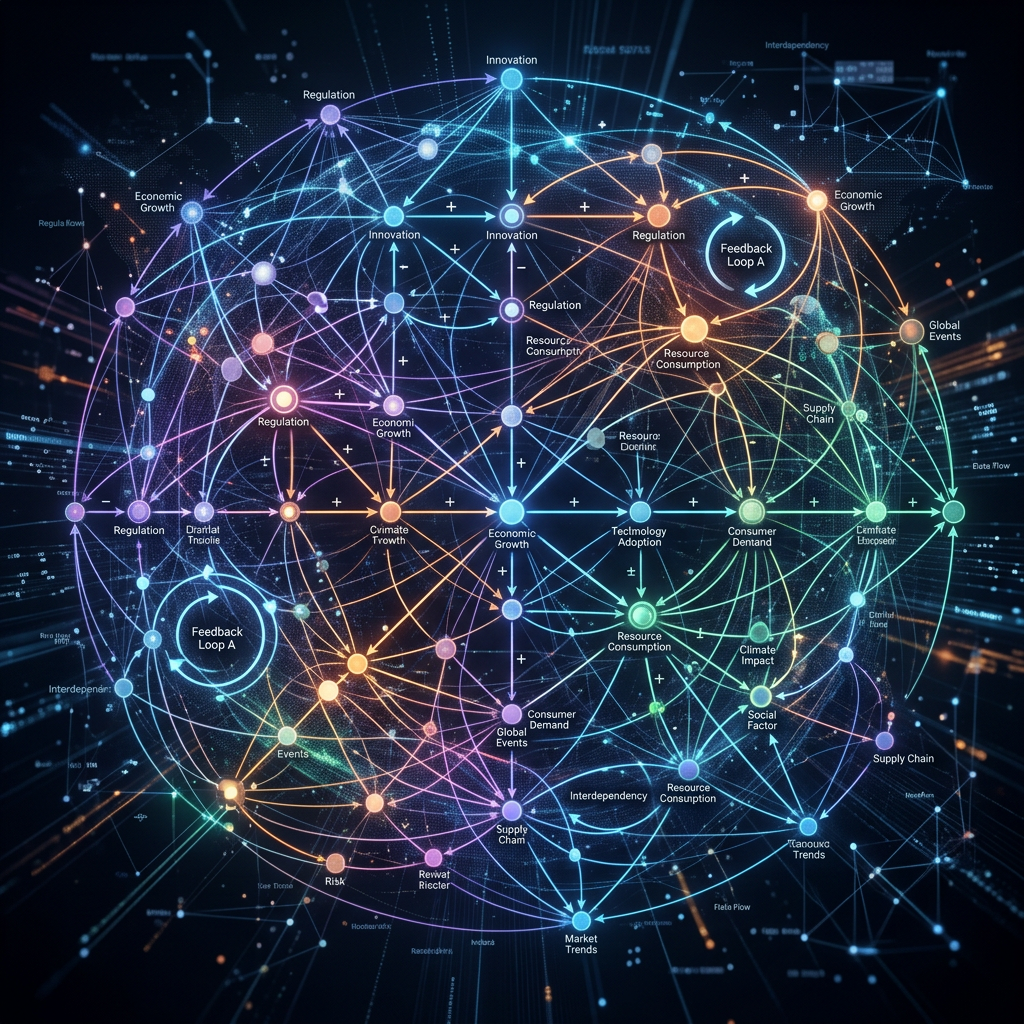
A common misunderstanding in science and everyday reasoning is the belief that identifying a cause is the same as fully explaining why something happens.
In reality, a cause is only part of an explanation, not the whole picture.
What a “cause” actually tells us
A cause identifies:
- A factor that contributes to an outcome
- A condition that increases the likelihood of an event
- A trigger within a broader system
So, a cause is:
One piece of a larger explanatory structure
It does not, on its own, describe the full system behind the event.
Why causes are often incomplete
Most real-world events are influenced by:
- Multiple interacting factors
- Background conditions
- Timing and sequence of events
- Environmental context
- Feedback effects
So, what we label as “the cause” is often:
A selected part of a much larger network
The key idea: explanation is a system, not a point
A full explanation usually requires:
- Identifying contributing factors
- Understanding how they interact
- Recognising constraints and conditions
- Mapping how effects emerge over time
So, the explanation is:
Structural and multi-layered, not single-factor
Where misunderstanding happens
Single-cause explanations are common because they:
- Simplify communication
- Make narratives easier to follow
- Support quick decision-making
- Fit everyday intuition
But this can hide the real structure of the system:
Which is usually multi-causal and interconnected
Why this matters
Treating a single cause as a full explanation can lead to:
- Oversimplified conclusions
- Incorrect attribution of responsibility
- Misunderstanding of scientific findings
- Failure to predict similar events in different contexts
So, the issue is not identifying causes; it is:
Assuming causes operate independently and completely
The mechanism (simple version)
In complex systems:
- Multiple variables interact
- Effects emerge from combinations of factors
- Timing and context shape outcomes
- Feedback loops modify results
So, outcomes are:
Emergent properties of systems, not single inputs
Simple takeaway
A cause is not a full explanation; it is one part of a larger system of interacting factors that together produce an outcome.
References
https://plato.stanford.edu/entries/causation-metaphysics/