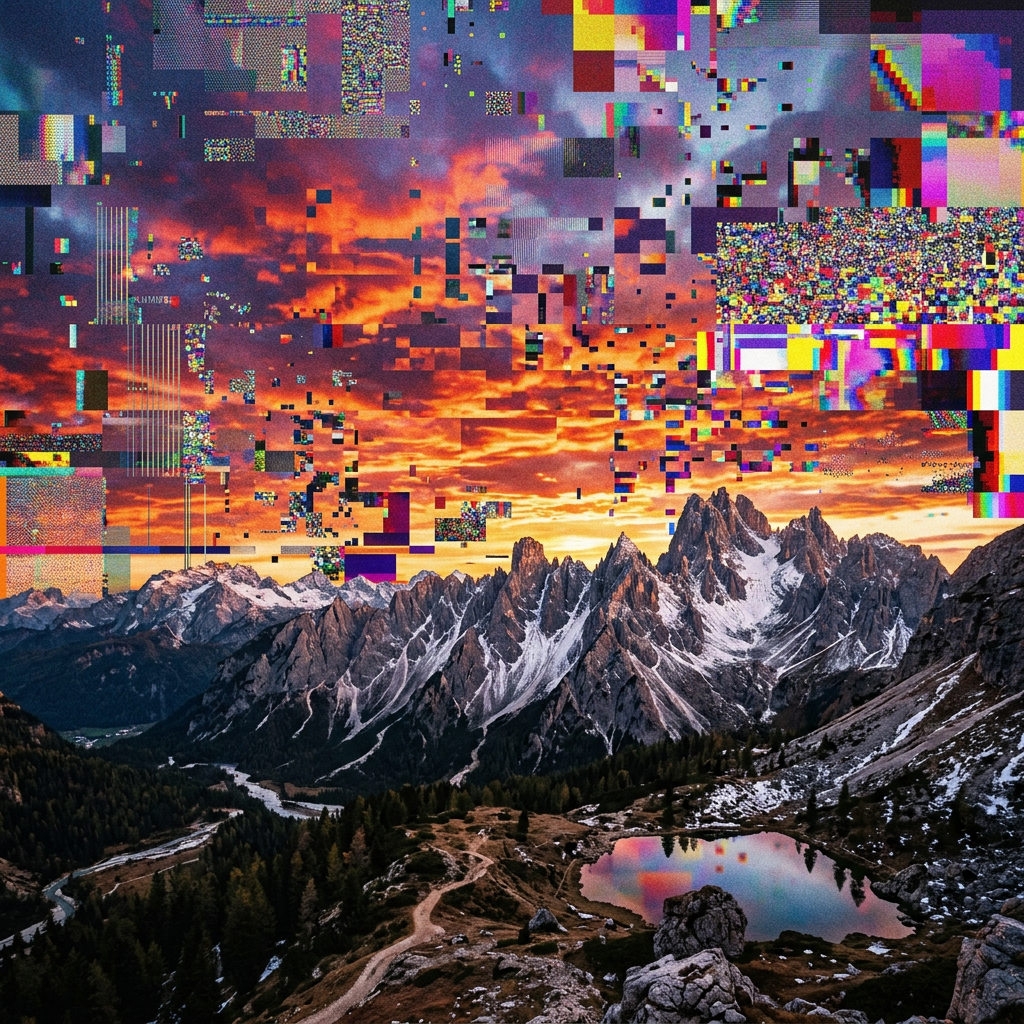
The idea that reality might be a simulation has moved from science fiction into serious philosophical and scientific debate. But what does science actually say?
The honest answer is: There is no evidence that we are in a simulation, but there is also no simple way to fully rule it out.
1. Where the simulation idea comes from
One of the most cited arguments is from philosopher Nick Bostrom’s “simulation hypothesis,” which suggests that if advanced civilisations can create highly realistic simulations, then:
- They might run many simulations of conscious beings
- Simulated realities could outnumber the “original” reality
- Statistically, we might be more likely to be in a simulation
This is a philosophical probability argument, not experimental evidence.
2. What physics currently shows
Modern physics (quantum mechanics, relativity, cosmology) describes the universe with extreme precision, but:
- It does not indicate artificial computation
- It does not show signs of “rendering” or external control
- It behaves consistently under natural laws
So far, physics supports a self-consistent natural universe, not a coded one.
3. People look for “glitches” but haven’t found them
Some have suggested signs like:
- Limits in physical constants
- Quantum randomness
- Pixel-like structure of space-time
But none of these are evidence of simulation:
- Quantum randomness is well explained in physics
- Space-time structure is still continuous in current models
- No reproducible “error in reality” has been detected
4. The brain makes the idea feel plausible
Human perception is:
- Pattern-seeking
- Meaning-making
- Sensitive to hidden structure
So, the idea of a “hidden system behind reality” feels intuitive, but that doesn’t make it scientifically supported.
5. The scientific position
Most scientists and philosophers take a cautious view:
- It is not currently testable in a meaningful way
- It is not supported by empirical evidence
- It remains a philosophical hypothesis, not a scientific theory
In science, a claim needs testable predictions, and the simulation hypothesis struggles with that.
6. So… could it still be true?
Logically, it’s difficult to completely disprove. But:
- Lack of evidence is not evidence of truth
- “Possible in theory” does not mean “likely in reality”
So, science stays neutral but unconvinced.
The simple takeaway
- The simulation hypothesis is an interesting philosophical idea
- But there is currently no scientific evidence supporting it
- Physics continues to describe a consistent natural universe
Final thought
Whether or not reality is simulated, our experience of it, learning, feeling, exploring, and understanding, remains real to us in every practical sense.
And that, for science, is the most important part.