

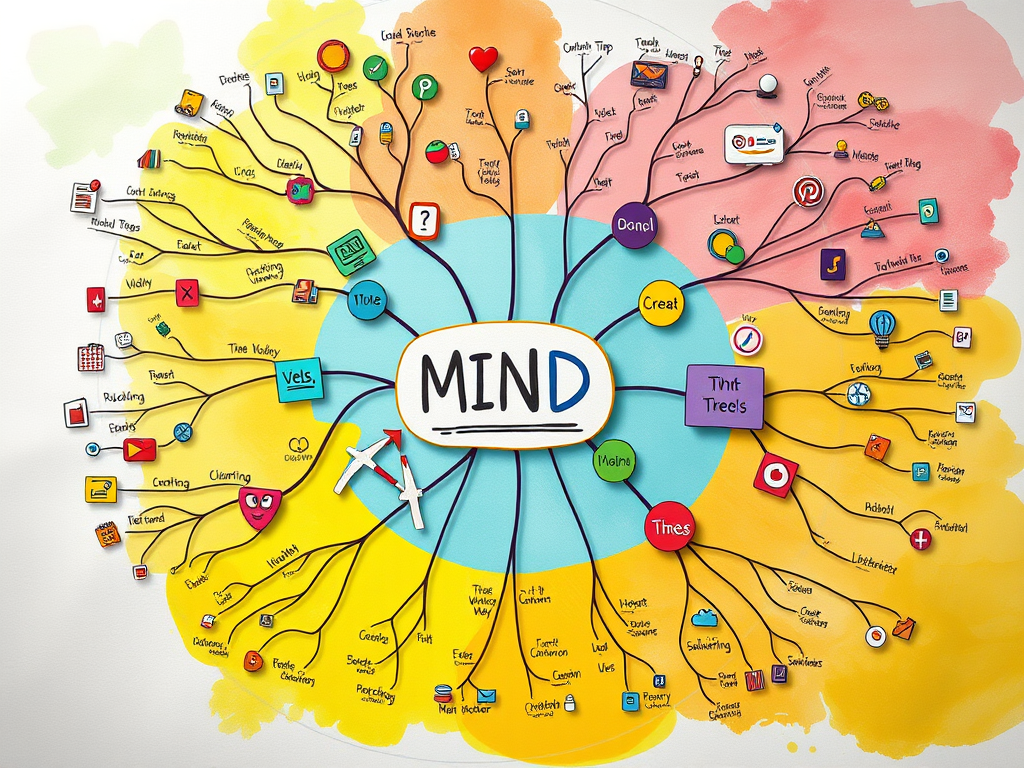
Struggling to connect ideas or remember concepts? Mind mapping is a visual note-taking technique that helps you organise thoughts and study more effectively.
1. Start with a Central Idea
Write your main topic in the centre of the page. This anchors your focus and mirrors how the brain naturally organises information.
- Step-by-Step Guide to Mind Mapping for Studying – Creately
- How to Study Using Mind Mapping – SchoolHabits
2. Branch Out
Draw lines for subtopics and add key points, examples, or diagrams. Think of it like a tree of knowledge radiating outward.
- Using Mind Maps for Revision – Student Beans
- Mind Mapping Techniques for Visual Learners – SchoolHabits
3. Use Colours & Symbols
Highlight important points with different colours, shapes, or icons. These visual cues boost memory and make your map more engaging.
- Creately’s Mind Map Templates with Colour Coding – Creately
- Mind Mapping with Visual Cues – SchoolHabits
4. Keep it Concise
Use short words, phrases, or images. Mind maps are about clarity and connection, not long paragraphs.
5. Review & Expand
Go back and add details or links between ideas as your understanding grows. Your mind map becomes a living study tool.
Mind mapping transforms scattered notes into clear, memorable visuals. Once you start, your brain will love the clarity it brings!
Have you tried mind mapping before? Share a topic you’d map out below!