


Chemical Sensors: A Modular Lecture Series
Recommended background: Introductory physical chemistry, basic electrochemistry, and analytical instrumentation
1. Introduction
Chemical sensors are the molecular translators of the modern world. They convert chemical information, such as the presence, concentration, or activity of a species, into a measurable signal, often electrical. These devices underpin technologies ranging from breathalysers and fuel cells to environmental monitors and medical diagnostics.
Chemical sensing forms the foundation of analytical chemistry, where the goal is not only to detect but to quantify and understand chemical systems in real time. For an overview of analytical methods, see LibreTexts: Analytical Chemistry.
This lecture introduces the concept of chemical sensing, defines what makes a sensor chemical, and outlines the two essential steps in sensing: recognition and transduction. We will explore how sensors function in real time, what governs their sensitivity and selectivity, and how they integrate into wider analytical systems.
2. What Is a Chemical Sensor?
A chemical sensor is a device that responds to the presence of a chemical species by producing a measurable signal, typically electrical, that can be interpreted and used to make decisions. It is part of an information acquisition system, where the objective is to obtain real-time data about the chemical composition of a sample or environment.
Chemical sensing comprises two fundamental steps:
- Recognition: the selective interaction between the sensor and the target species
- Amplification (Transduction): the conversion of that interaction into a measurable physical signal
These two stages are universal across sensor types, whether detecting ions, gases, biomolecules, or redox-active compounds.
For a general introduction, see ScienceDirect: Chemical Sensor Overview.
3. Recognition and Selectivity
Recognition is the defining feature of chemical sensing. It refers to the sensor’s ability to selectively interact with a target species (X) even in the presence of many competing molecules. This interaction is often expressed as an equilibrium:
X + S ⇌ XS
Where:
- X = analyte (target molecule)
- S = sensor’s active site
- XS = bound complex
The equilibrium constant K is defined by:
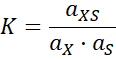
where a denotes activity (often approximated by concentration). A high K implies strong binding, advantageous for sensitivity but potentially problematic for reversibility, as the analyte may not readily detach after detection.
The thermodynamic relationship between K and the Gibbs free energy change is given by:

where R is the gas constant and T is the temperature (in kelvins).
Further reading:
Example: Gas Recognition by Metal-Oxide Sensors
Tin dioxide (SnO₂) gas sensors detect reducing gases such as CO or CH₄ through selective surface adsorption. The recognition occurs via oxygen species chemisorbed on the oxide surface, which react with the analyte gas, altering the surface charge and, in turn, the electrical resistance.
4. Amplification and Transduction
After recognition, the interaction must be converted into a measurable signal, a process known as transduction or amplification.
Common transduction mechanisms include:
- Electrochemical transduction: changes in potential (potentiometry), current (amperometry), or conductance (conductometry)
- Optical transduction: variations in absorbance, fluorescence, or refractive index (e.g. optical fibre sensors)
- Mass-based transduction: changes in resonant frequency of a piezoelectric crystal (as in quartz crystal microbalances)
For an overview of transduction processes, see LibreTexts: Sensor Transduction.
Example: The Clark Oxygen Electrode
The Clark electrode uses an electrochemical transduction principle to measure oxygen concentration. Oxygen diffuses through a membrane and is reduced at a platinum cathode. The resulting current is proportional to oxygen partial pressure, a fundamental concept in Amperometric sensing.
5. Real-Time Sensing and Signal Output
A major advantage of chemical sensors is their real-time functionality. Unlike batch analytical techniques, sensors operate continuously, providing up-to-the-minute information on system conditions.
The signal, typically electrical (voltage, current, resistance, or frequency), is processed by instrumentation electronics to yield a concentration or activity value.
Signal output depends on:
- The transduction mechanism used
- The equilibrium constant K
- The total number of active sites
- The dynamic range of the sensor
Real-time systems are particularly valuable in medical monitoring, for instance, continuous glucose monitors (CGMs) employ enzymatic recognition (glucose oxidase) and electrochemical transduction to track blood glucose continuously.
Further reading:
6. Dynamic Range and Sensor Saturation
The dynamic range defines the interval between a sensor’s lower and upper detection limits, the concentration span over which it gives a reliable response.
- Lower limit: the minimum detectable activity (below this, the response merges with baseline noise)
- Upper limit: the saturation point (where all binding sites are occupied and the signal plateaus)
The dynamic range is determined by the total activity (or concentration) of the binding sites.
Mathematically, this can be expressed as:
- If K aₓ ≫ 1, the sensor is saturated
- If K aₓ ≪ 1, the sensor operates within its linear dynamic range
- If aₓₛ < (aₓₛ)ₘᵢₙ, the sensor shows no measurable response
For example, the pH glass electrode has a remarkably broad dynamic range (>30 orders of magnitude), achieved through its complex multilayered structure of hydrated silica and exchange sites.
Reference: LibreTexts: Sensor Response Curves.
7. Coupling Recognition to Transduction
The overall performance of a chemical sensor depends on how effectively recognition is coupled to transduction. Weak coupling results in low signal strength or noise, even when molecular recognition is strong.
Effective coupling requires careful engineering of:
- The sensor interface (e.g. membrane or electrode surface)
- The transduction layer (e.g. piezoelectric crystal or optical fibre)
- The signal-processing electronics
Example: Enzyme-Based Biosensors
In a glucose biosensor, glucose oxidase catalyses the oxidation of glucose, producing hydrogen peroxide. This product is electrochemically active, providing a direct current response. The enzyme layer (recognition) and electrode (transduction) must be closely integrated for efficient operation.
For background on biological coupling and biosensor interfaces, see LibreTexts: Enzyme-Based Biosensors.
Another striking biological example is Inscentinel Ltd (UK), which trains bees to detect volatile organic compounds. The insects’ natural olfactory recognition is coupled with optical or electrical transduction, effectively turning living organisms into sensing machines.
8. Surface vs Bulk Interactions
Chemical sensors operate through two principal modes of interaction:
- Surface interactions: the analyte adsorbs or reacts at the sensor’s surface
- Bulk interactions: the analyte partitions or diffuses into the sensor material
Surface-based sensors include:
- Metal-oxide gas sensors (SnO₂, ZnO, WO₃)
- Ion-selective electrodes
- Chemiresistors
Bulk-based sensors include:
- pH glass electrodes (hydrated gel layer)
- Polymer-immobilised ionophore membranes
- Optical fibre sensors utilising evanescent fields
Surface effects dominate where adsorption kinetics and surface charge influence signal generation; bulk effects prevail in systems where diffusion or absorption through a medium determines response.
See LibreTexts: Surface vs Bulk Sensing for illustrations and examples.
9. Sensor Systems and Information Acquisition
In practical use, sensors form part of sensor systems, which typically include the following components:
- Sampling: delivering the analyte to the sensor (e.g. pumps, valves, microfluidics)
- Manipulation: adjusting physical or chemical parameters (e.g. temperature, pH, ionic strength)
- Reagent addition: enhancing selectivity or sensitivity
- Signal processing: filtering, amplifying, and digitising the raw signal
These stages, while external to the sensor itself, are critical for accuracy, stability, and reproducibility.
Example systems include:
- Electrochemical gas detectors (e.g. CO monitors) integrating sampling pumps and temperature control
- Lab-on-a-chip sensors, which perform all steps, sampling, mixing, and detection on a single microfluidic platform
For an overview of integrated systems, see LibreTexts: Sensor Systems.
10. Summary and Next Steps
Chemical sensors are dynamic interfaces that translate molecular interactions into measurable signals. They depend upon:
- Selective recognition of the target species
- Physical amplification through transduction mechanisms
- Real-time signal generation and interpretation
- Defined dynamic ranges for quantitative accuracy
- Integration into broader analytical systems
The study of chemical sensors sits at the intersection of chemistry, materials science, engineering, and informatics. Advances in nanomaterials, microfabrication, and biosensing continue to expand the possibilities of what sensors can detect and how precisely they can operate.
Next Lecture: Lecture 2 – Selectivity and Recognition, where we will examine membrane selectivity, Donnan potentials, and ion-selective interfaces in detail.
Further reading:
- LibreTexts: Sensors and Transducers
- Principles of Chemical Sensors, 3rd ed., J. Janata (Springer)
- Royal Society of Chemistry: Analytical Sensors Collection
Support the Archive
This archive is freely shared as a communal act of care.
If you’d like to support its continuation, consider purchasing a companion PDF set for £1 per lecture, with an associated quiz, via Payhip, with the final price depending on the number of lectures in the set, available only once the full series is complete.