recent posts
- C5 – Chemical Changes
 The C5 topic in GCSE Chemistry equips students with the knowledge to understand and explain chemical reactions. It covers acids, alkalis, metal reactions, displacement, redox reactions, and the significance of observations. Mastery of these concepts enables students to predict outcomes, write equations, and construct high-quality exam responses, facilitating effective learning.
 - Why We Get Déjà VuDéjà vu is the sensation of experiencing a current situation as familiar, despite it being new. This occurs due to temporary mismatches in brain processing, leading to errors in memory recognition. It illustrates that memory is constructive and prone to inaccuracies, helping us understand how the brain interprets experiences.
- Effective Flashcard Strategies for Better LearningFlashcards are a powerful study tool that enhances active recall and promotes spaced repetition for better memory retention. To create effective flashcards, write questions and answers on opposite sides, use images, and keep concepts concise. Regular review and digital apps like Quizlet or Anki can further improve learning outcomes.
- Honouring Neurodiversity in Resource DesignThe framework emphasises designing inclusive resources that honour neurodivergent perspectives. It advocates for intentional listening, flexibility in structure, and inviting language. By prioritising diverse cognitive needs and encouraging reflection and engagement, the aim is to innovate rather than accommodate, fostering supportive environments for neurodivergent users.
- C4 – Quantitative ChemistryThe C4 module in GCSE Chemistry focuses on quantitative skills necessary for understanding chemical calculations. It covers key concepts such as relative formula mass, moles, balanced equations, limiting reactants, percentage yield, and concentration. Mastery of these topics enables students to perform calculations confidently and prepares them for higher-tier examination success.





Tag: thermistors
-
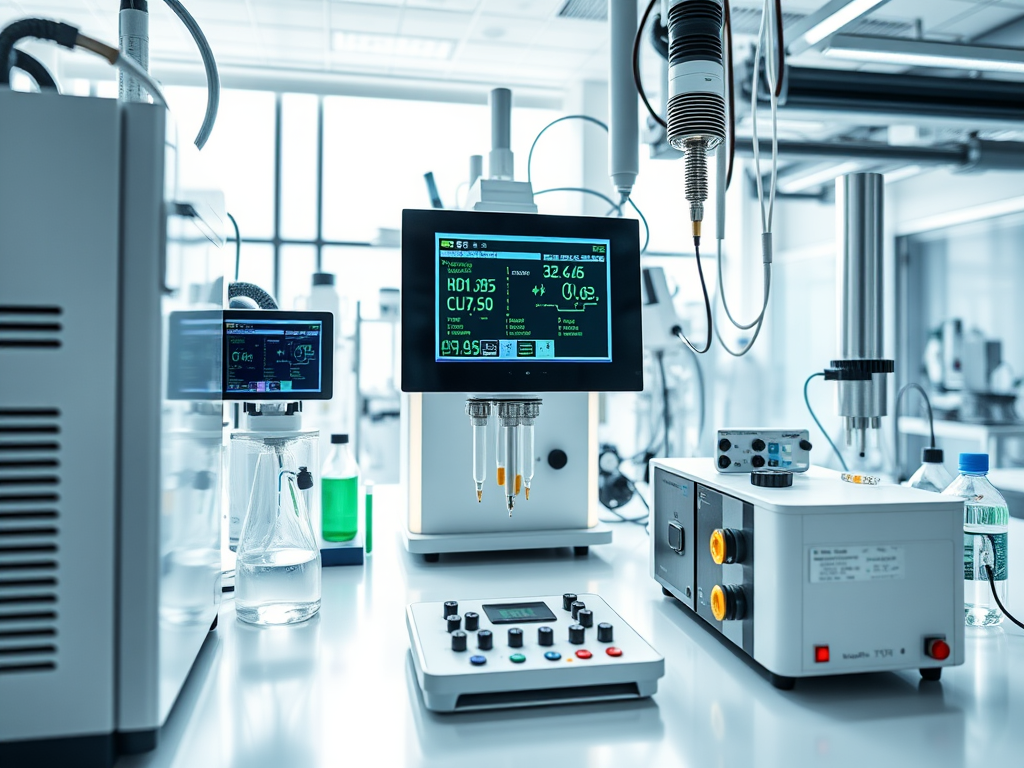
The modular lecture series on chemical sensors covers essential principles of sensor systems, including sample handling, signal transduction, and data processing. It emphasises biological sensors’ applications in diagnostics, environmental monitoring, and food safety. Key concepts include integration, noise reduction, and system-level design considerations for reliable, real-time measurement.
-
Chemical sensors, particularly conductimetric sensors and chemiresistors, detect chemicals by measuring resistance changes due to adsorption. They find applications in gas detection, water quality monitoring, and industrial control. Key elements include sensor materials, adsorption principles, and film thickness, which influence sensitivity and response times. Their low cost and fast response make them effective in various…
-
This lecture series addresses chemical sensors, particularly piezoelectric and mass sensors, highlighting their mechanisms and applications. Key topics include the piezoelectric effect, the operation of quartz crystal microbalances (QCM), and their utility in gas and biosensing. The series emphasises their high sensitivity, real-time monitoring capabilities, and practical applications in various fields.
-
This lecture series focuses on catalytic gas sensors and fuel cells, detailing their principles, detection mechanisms, and applications in safety, environmental monitoring, and medical diagnostics. The lecture covers sensor operation, response times, and factors affecting sensitivity, emphasising the importance of calibration and maintenance for accurate measurements in real-world scenarios.
-
This lecture series on chemical sensors focuses on ion-selective electrodes (ISEs) used in various applications. It covers membrane types, Donnan and liquid junction potentials, sensor performance factors, and practical considerations. Key topics include selectivity coefficients and a real-world worked example of measuring potassium ions. Future lectures will explore catalytic gas sensors.
-
Electrochemical sensors, essential for real-time chemical monitoring, are categorised into potentiometric and amperometric types. Potentiometric sensors measure voltage, ideal for ion detection, while amperometric sensors measure current, suitable for redox-active analytes. Key applications span clinical diagnostics, environmental monitoring, and industrial controls, with proper calibration and stability being crucial for accuracy.
-
The pH glass electrode, a benchmark in chemical sensing, showcases high selectivity and a dynamic range exceeding 30 decades. Its structure includes a glass membrane and internal reference, facilitating Nernstian responses through layered binding sites. Applications span environmental monitoring to clinical chemistry, emphasising the importance of calibration and maintenance for accuracy.
-
This lecture series focuses on chemical sensors, particularly their dynamic range, which is crucial for reliable measurements. It covers the limits of detection, factors influencing dynamic range, examples of electrochemical and biological sensors, and strategies for extending range. Understanding these concepts is essential for applications in various fields.
-
This lecture series focuses on chemical sensors, emphasising selectivity, molecular recognition, and the principles governing sensor design. Key topics include mechanisms for achieving selectivity through membranes and receptors, thermodynamic and kinetic factors, and challenges faced in maintaining sensor performance. It highlights the balance between selectivity and sensitivity in effective sensor development.
-
Chemical sensors are devices that convert chemical information into measurable signals, crucial for applications like medical diagnostics and environmental monitoring. They involve two main processes: recognition, the selective interaction with target species, and transduction, converting that interaction into a measurable signal. Their effectiveness relies on real-time functionality, sensitivity, and integration into analytical systems.