

The skills you need to understand, evaluate, and apply chemistry to real‑world resource use with confidence.
C12 is one of the most application‑heavy, evaluation‑focused, and sustainability‑driven topics in GCSE Chemistry. Students learn how potable water is produced, how materials are made and recycled, how Life Cycle Assessments work, and how chemistry supports sustainable development. The C‑Series version teaches students to think in systems: how resources are obtained, processed, used, and managed responsibly.
What C12 Helps You, Master
1. Finite vs Renewable Resources
Students learn:
- Finite resources → will eventually run out (e.g., fossil fuels, metals)
- Renewable resources → can be replaced (e.g., wood, biofuels)
- Sustainable development = meeting today’s needs without harming the future
Higher Tier adds:
- Evaluating trade‑offs between resource types
- Environmental, economic, and social considerations
Mastery teaches students to justify resource choices using multi‑factor reasoning.
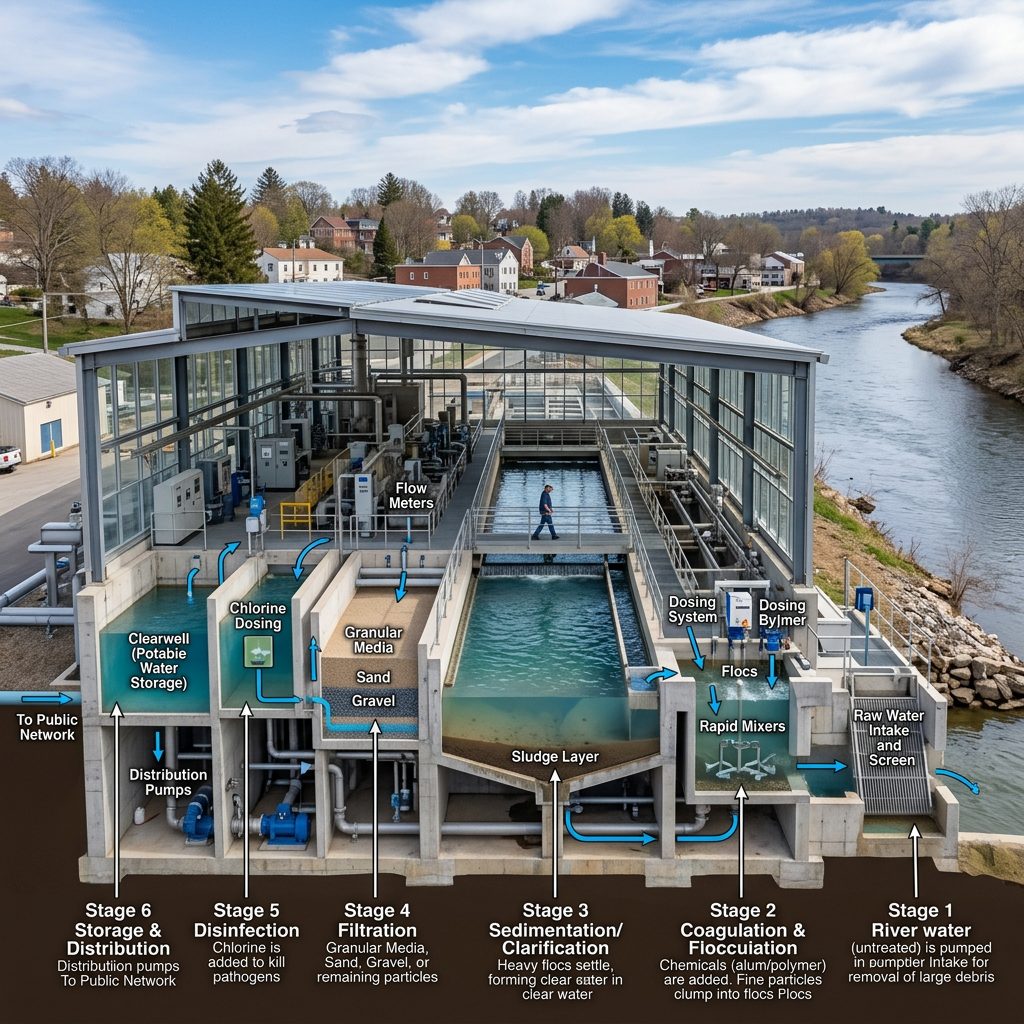
2. Potable Water & Water Treatment
Students learn:
- potable water = safe to drink, not necessarily pure
- UK water treatment:
- Filtration
- Sedimentation
- Sterilisation (chlorine, ozone, UV)
Higher Tier adds:
- Desalination (distillation or reverse osmosis)
- Evaluating energy costs
- Comparing water sources (freshwater, seawater, wastewater)
Mastery teaches students to evaluate water‑treatment methods using evidence.
3. Wastewater Treatment
Students learn the stages:
- Screening
- Sedimentation
- Aerobic digestion
- Anaerobic digestion
Higher Tier adds:
- Comparing wastewater treatment to potable water production
- Evaluating environmental impact
Mastery links treatment processes → sustainability → resource recovery.
4. Life Cycle Assessments (LCAs)
Students learn:
- LCAs assess environmental impact across:
- Raw materials
- Manufacturing
- Use
- Disposal
Higher Tier adds:
- Interpreting LCA data
- Comparing products (e.g., plastic vs paper bags)
- Understanding uncertainty and bias in LCAs
Mastery teaches students to critique LCAs using scientific reasoning.
5. Recycling & Material Use
Students learn:
- Recycling metals reduces energy use
- Reduces mining and environmental damage
- Glass, metals, paper, and plastics can be recycled
Higher Tier adds:
- Separating metals using magnets or electrolysis
- Evaluating recycling challenges (contamination, cost, energy)
Mastery links recycling → sustainability → resource efficiency.
6. Alloys, Ceramics, Polymers & Composites
Students learn:
- Alloys → mixtures of metals (stronger than pure metals)
- Ceramics → brittle, heat‑resistant
- Polymers → properties depend on monomers & structure
- Composites → matrix + reinforcement
Higher Tier adds:
- Evaluating materials for specific uses
- Linking structure → properties → applications
Mastery teaches students to justify material choices using chemistry + engineering reasoning.
7. Haber Process & NPK Fertilisers (Higher Tier)
Students learn:
- Haber process → nitrogen + hydrogen → ammonia
- Conditions: 450°C, 200 atm, iron catalyst
- Reversible reaction
Higher Tier adds:
- Yield vs rate trade‑offs
- NPK fertilisers from ammonia
Mastery links industrial chemistry → optimisation → sustainability.
8. Avoiding Common Misconceptions
C12 highlights the mistakes examiners see every year:
- “Potable water is pure water” (it’s safe, not pure)
- “Renewable means unlimited” (it doesn’t)
- “LCAs give exact answers” (they involve judgement and assumptions)
- “Recycling always uses less energy” (not always true)
- “Haber process uses low pressure for safety” (it uses high pressure for yield)
Fixing these earns easy marks.
9. Building Exam‑Ready Explanations
Mastery Tier teaches students how to:
- Evaluate water‑treatment methods
- Compare renewable and finite resources
- Interpret and critique LCAS
- Justify material choices
- Explain industrial processes
- Write full, structured 4–6 mark answers
This is where Grades 8–9 are earned.
Why C12 Matters
Using Resources underpins sustainability, industrial chemistry, and environmental decision‑making. C12 gives students the skills to:
- Evaluate resource use
- Understand water treatment
- Interpret LCAs
- Compare materials
- Write high‑quality, long answers
It turns resource chemistry from “lists of processes” into a coherent, evaluative system.
What Comes Next
C12 is the final block in the C‑Series. You now have the complete set of Chemistry summary posts:
The full C‑Series PDF is now ready, a complete skill‑based companion to the entire GCSE Chemistry course.