

Carbon compounds, hydrocarbons, crude oil, and the chemistry behind fuels and materials
Organic chemistry is the study of carbon‑based compounds. Carbon is unique; it can form long chains, rings, and complex structures. This makes organic chemistry the foundation of:
- Fuels
- Plastics
- Pharmaceuticals
- Biological molecules
- Modern materials
Once students understand hydrocarbons, crude oil, and polymers, the whole topic becomes far more logical.
GCSE Exam Essentials
Students must be able to:
- Define organic chemistry and hydrocarbons
- Distinguish between alkanes and alkenes
- Describe crude oil and fractional distillation
- Explain combustion, cracking, and polymerisation
- Recognise functional groups (GCSE level)
- Understand the environmental impact of burning fuels
These appear across AQA, Edexcel, and OCR GCSE Chemistry specifications.
1. What Organic Chemistry Is
Organic chemistry is the study of carbon‑based compounds.
Carbon can form:
- Long chains
- Branched chains
- Rings
- Complex molecular structures
This versatility makes carbon the basis of life and fuels.
“Organic chemistry studies carbon-based compounds, which form the basis of life and fuels.”
2. Hydrocarbons
Hydrocarbons are compounds made only of hydrogen and carbon.
Two key families at GCSE:
Alkanes
- Single bonds only
- Saturated (cannot add more atoms easily)
- General formula: CₙH₂ₙ₊₂
- Less reactive
Examples: methane, ethane, propane, butane
Alkenes
- Contain a double bond
- Unsaturated (can undergo addition reactions)
- General formula: CₙH₂ₙ
- More reactive
Examples: ethene, propene
Alkenes are used to make polymers.
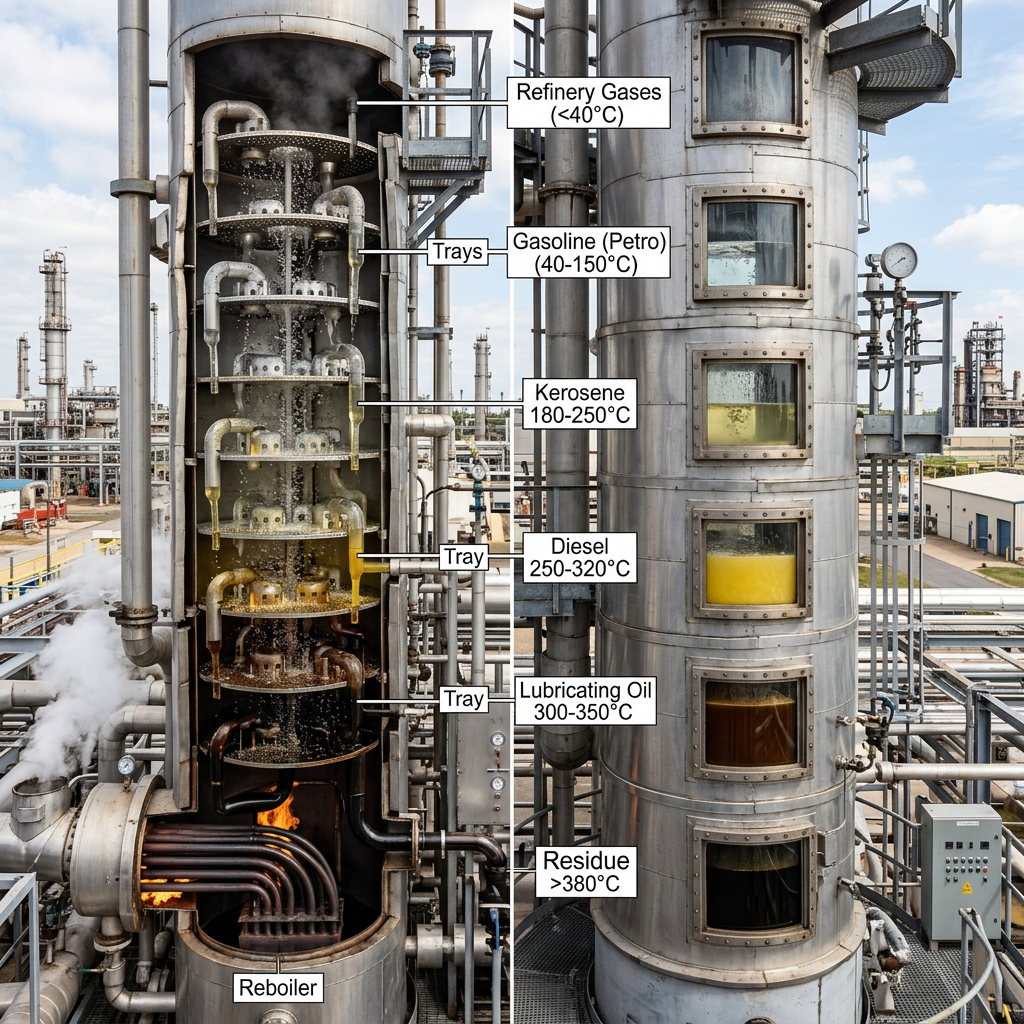
3. Crude Oil and Fractional Distillation
Crude oil is a mixture of hydrocarbons formed from ancient biological material.
It is separated by fractional distillation, which sorts hydrocarbons by boiling point.
Fractions include:
- Petrol
- Diesel
- Kerosene
- Bitumen
- Gases
Shorter hydrocarbons:
- Lower boiling points
- More flammable
- More useful as fuels
Longer hydrocarbons:
- Higher boiling points
- Thicker and less flammable
4. Key Organic Reactions
Combustion
Hydrocarbon + Oxygen → Carbon dioxide + Water
Complete combustion: blue flame. Incomplete combustion: yellow flame + carbon monoxide (dangerous)
Cracking
Breaking long hydrocarbons into:
- Shorter alkanes
- Alkenes (used for polymers)
Cracking helps meet fuel demand.
Polymerisation
Joining many small molecules (monomers) to form a polymer.
Examples:
- Plastics
- Synthetic fibres
- Biological polymers (DNA, proteins)
5. Environmental Impact (GCSE Required)
Burning hydrocarbons produces:
- CO₂ → climate change
- CO → toxic
- SO₂ → acid rain
- NOₓ → respiratory problems
Cracking and refining also have environmental costs.
6. Common Misconceptions (GCSE‑specific)
Students often:
- Think all carbon compounds are organic (CO₂ is not)
- Confuse alkanes and alkenes
- Forget that alkenes contain a double bond
- Believe polymers are small molecules (they are long chains)
- Mix up crude oil as an element (it is a mixture)
“Thinking all carbon compounds are organic (CO₂ is not)” “Confusing alkanes and alkenes”
7. Quick Check Questions
Use these for active recall:
- What is a hydrocarbon?
- What is the difference between an alkane and an alkene?
- Why is crude oil separated by fractional distillation?
- What are the products of complete combustion?
- What is cracking, and why is it important?
8. Summary
Organic chemistry explains the fuels we burn, the plastics we use, and the molecules that make life possible. Understanding hydrocarbons, crude oil, and polymers gives students a clear picture of how carbon chemistry shapes the modern world.