

Understanding the Language of Measurement in Chemistry
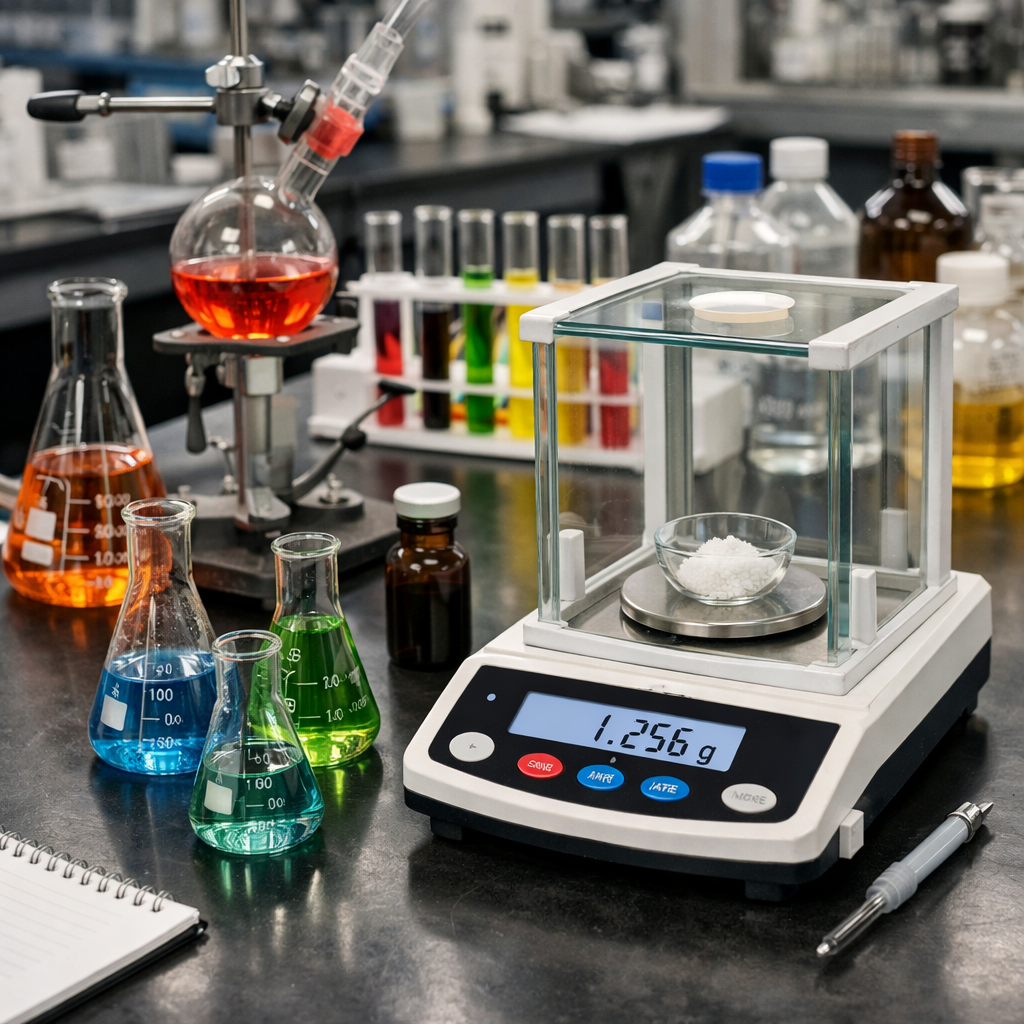
Quantitative chemistry is the branch of chemistry that deals with measurable amounts of substances, such as how much of something reacts, forms, or is required in a chemical process.
It is one of the most important foundations of modern chemistry because it allows scientists to move from observation to prediction.
Without quantitative chemistry, chemistry would be descriptive. With it, chemistry becomes precise, predictive, and powerful.
What is Quantitative Chemistry?
Quantitative chemistry focuses on the numerical relationships between reactants and products in chemical reactions.
It involves calculating:
- The number of moles of substances
- Mass relationships in reactions
- Concentration of solutions
- Volumes of gases involved in reactions
- Yield and efficiency of chemical processes
At its core, it answers a simple but essential question:
“How much is involved in a chemical reaction?”
Why Quantitative Chemistry Matters
Chemistry is not just about what substances are; it is about how they interact in precise proportions.
Quantitative chemistry is essential because it enables:
1. Accurate Chemical Reactions
It ensures reactants are mixed in the correct ratios to produce predictable outcomes.
2. Industrial Scale Production
From pharmaceuticals to fuel production, industries rely on precise chemical calculations to minimise waste and maximise efficiency.
3. Medicine and Pharmacology
Drug dosages depend on accurate measurements of chemical concentration and mass.
4. Environmental Monitoring
Understanding pollutant concentrations helps assess environmental impact and safety levels.
Real-World Applications
Quantitative chemistry is used in:
Pharmaceuticals
Ensuring safe and effective drug dosages.
Manufacturing
Optimising chemical production processes to reduce cost and waste.
Environmental Science
Measuring pollutant concentrations in air, water, and soil.
Food Industry
Controlling ingredient proportions and safety standards.
Why Students Must Master It
Quantitative chemistry is a core topic in GCSE and A-level chemistry because it develops:
- problem-solving skills
- numerical reasoning
- scientific accuracy
- understanding of real-world chemical systems
It is also one of the most frequently examined areas in chemistry assessments.
Final Thoughts
Quantitative chemistry transforms chemistry from observation into calculation.
It allows scientists to predict outcomes, control reactions, and apply chemistry in real-world systems from medicine to industry to environmental protection.
In many ways, it is the mathematical language of chemistry, and mastering it is essential for understanding how the chemical world truly works.