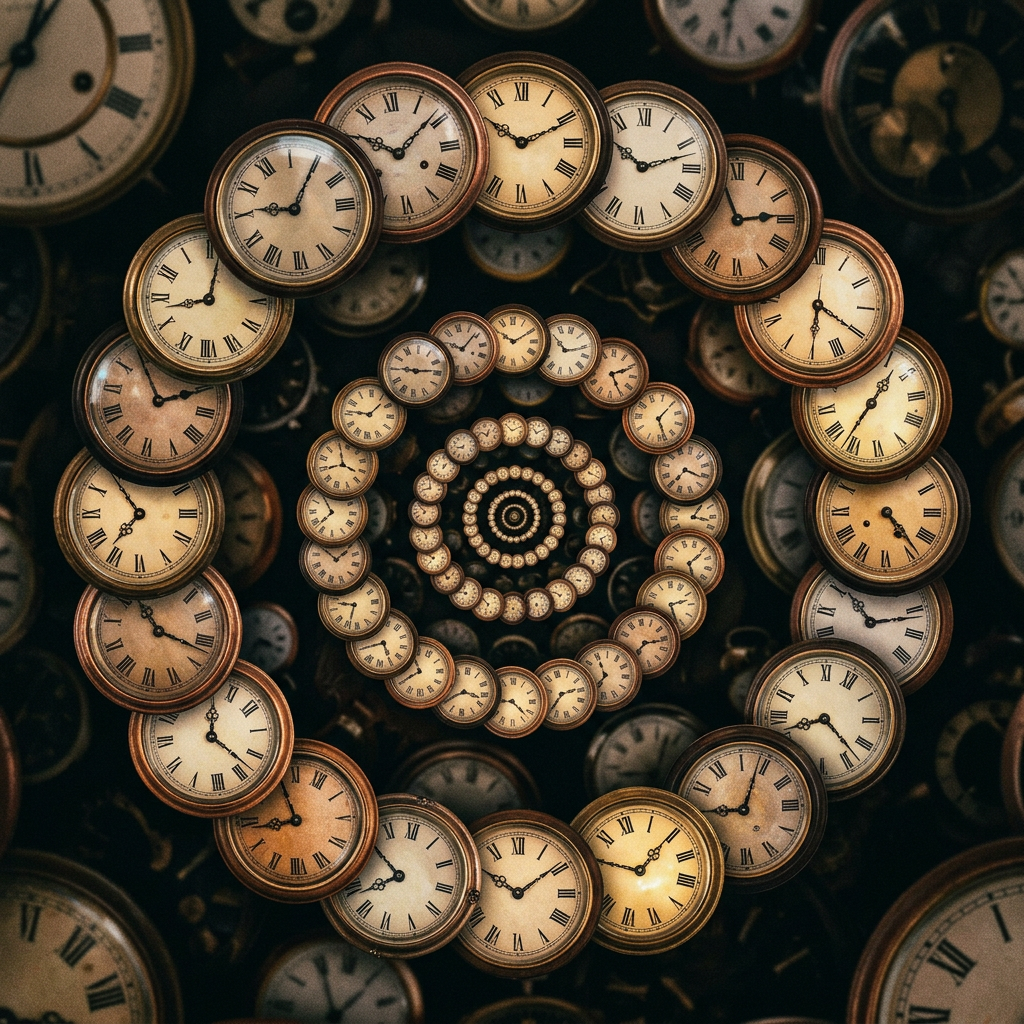
Most people notice it at some point: childhood feels long and detailed, but adulthood seems to speed up. Weeks blur into months, and years pass much faster than expected.
This isn’t just imagination; there are several well-studied psychological and neurological reasons why time feels like it accelerates as we get older.
1. Time is measured in “proportions,” not absolute units
When you’re 10 years old, one year is 10% of your entire life.
When you’re 40, one year is only 2.5%.
So, each passing year naturally feels “smaller” relative to your total experience.
2. The brain processes fewer “new memories” in adulthood
Time feels longer when your brain is actively recording new experiences.
- Childhood = constant novelty (new schools, skills, environments)
- Adulthood = more routine (repeated days, familiar patterns)
Less novelty = fewer memory markers = time feels like it passed faster.
3. Routine compresses your sense of time
When days are similar, the brain doesn’t separate them clearly in memory.
So instead of remembering 365 distinct days, your brain stores something more like:
“A typical work week repeated”
This creates the feeling that time “skipped ahead.”
4. The brain becomes more efficient but less detailed
As we age, the brain gets better at processing familiar information quickly.
That efficiency is useful, but it also means:
- Less attention to detail
- Fewer memorable “snapshots” of daily life
- Faster perceived passage of time
5. Attention changes how we experience time
Time feels slower when we are:
- Learning
- Exploring
- Emotionally engaged
Time feels faster when we are:
- Multitasking
- On autopilot
- Distracted or stressed
Modern adult life tends to shift toward the second category.
Can you slow the feeling of time down?
You can’t change biological ageing, but you can influence perception:
✔ try new experiences regularly
✔ break routines occasionally
✔ travel or change environments
✔ practice mindfulness or slower attention habits
The key factor is novelty + attention.
The simple takeaway
Time doesn’t actually speed up your brain just compresses it differently based on memory, routine, and experience density.
More new experiences = more “mental timestamps” = time feels fuller and slower.
Less novelty = smoother memory = time feels faster.