

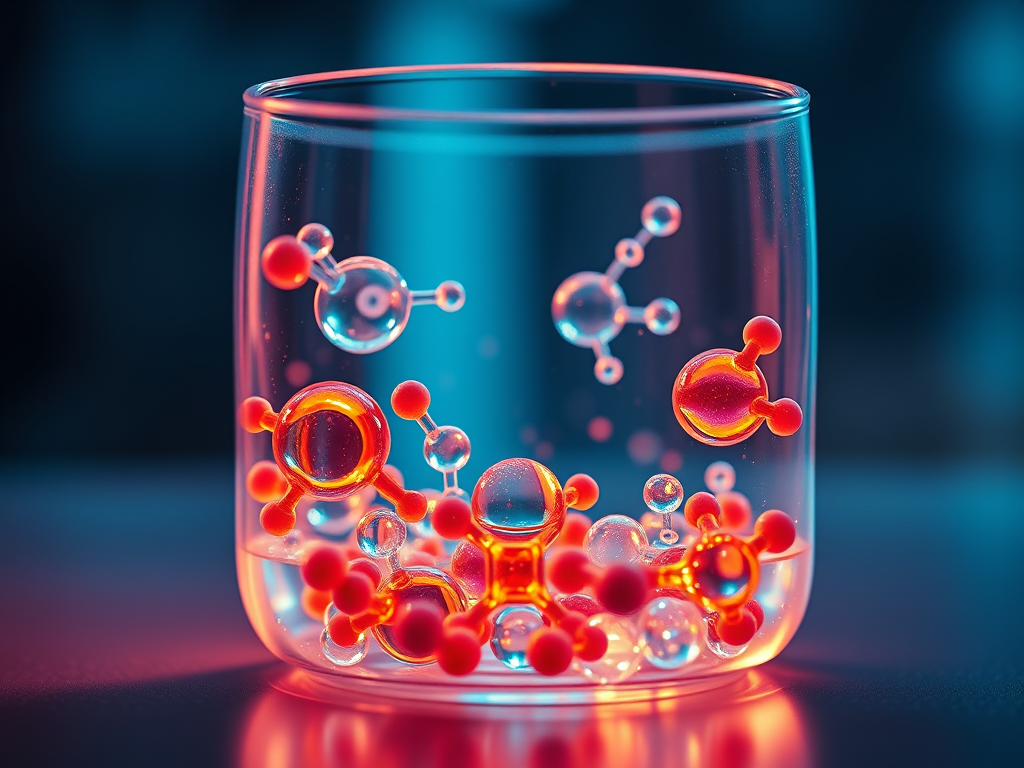
A companionable guide to reversible reactions, equilibrium constants, and the steady dance of molecular exchange with modular clarity and live links
Why equilibrium matters
Chemical reactions don’t always go to completion. Many are reversible reactants that form products, and products reform reactants. Over time, these opposing processes reach a balance known as dynamic equilibrium.
Understanding equilibrium helps us:
- Predict reaction outcomes
- Calculate concentrations at equilibrium
- Model biological and industrial systems
- Design conditions that favour desired products
Explore foundational concepts at RSC – Chemical Equilibria.
What is dynamic equilibrium?
In a reversible reaction, both forward and backward reactions occur simultaneously. At equilibrium:
- The rate of the forward reaction equals the rate of the backward reaction
- Concentrations of reactants and products remain constant
- Molecules continue to react, but the net change is zero
This balance is dynamic, not static. Reactions are still happening, but the system appears stable.
Visualising equilibrium
Imagine a sealed container with nitrogen and hydrogen reacting to form ammonia:
N₂ + 3H₂ ⇌ 2NH₃
At first, the forward reaction dominates when reactants are abundant. As products accumulate, the reverse reaction speeds up. Eventually, both rates equalise, and the system reaches equilibrium.
If you graph concentrations over time:
- Reactants decrease
- Products increase
- All levels flatten out when equilibrium is reached
The equilibrium constant (Kc)
For a general reaction:
aA + bB ⇌ cC + dD
The equilibrium constant is:
Kc = [C]^c × [D]^d / [A]^a × [B]^b
Where square brackets indicate concentration at equilibrium.
Kc tells us the position of equilibrium:
- If Kc > 1:
The equilibrium favours products. The reaction proceeds mostly to the right, forming more products than reactants.
- If Kc < 1:
The equilibrium favours reactants. The reaction does not proceed far to the right; more reactants remain than products. - If Kc ≈ 1:
Both reactants and products are present in similar amounts at equilibrium. The system is relatively balanced.
Explore equilibrium constants at ChemLibreTexts – Equilibrium Expressions.
Example: Hydrogen and Iodine
Consider the reaction:
H₂ + I₂ ⇌ 2HI
Suppose initial concentrations are:
- H₂ = 0.0100 mol/L
- I₂ = 0.0100 mol/L
- HI = 0.0200 mol/L
Let x be the change in concentration. At equilibrium:
- H₂ = 0.0100 – x
- I₂ = 0.0100 – x
- HI = 0.0200 + 2x
Substitute into the expression:
Kc = [HI]² / [H₂][I₂]
Solve for x to find equilibrium concentrations.
Common behaviours
Equilibrium is sensitive to:
- Initial concentrations
- Temperature
- Pressure (for gases)
- Catalysts (which affect rate, not position)
Regardless of starting amounts, the system always settles into the same ratio defined by Kc, though the absolute concentrations may vary.
Common misconceptions
- Equilibrium doesn’t mean equal concentrations; it means equal rates
- Reactions don’t stop at equilibrium; they continue at matched speeds
- Kc is constant only at a fixed temperature; changing the temperature alters Kc
Always interpret equilibrium in terms of rate balance, not concentration equality.
Closing: Balance in motion
Reaction equilibrium is a dynamic dance of molecules constantly shifting yet maintaining balance. By understanding how systems reach equilibrium and how to calculate Kc, we gain insight into the forces that shape chemical behaviour.
This lecture equips you to:
- Define dynamic equilibrium and its characteristics
- Use equilibrium expressions to calculate Kc
- Predict reaction outcomes based on Kc values
- Recognise how equilibrium responds to changing conditions
Support the Archive
This archive is freely shared as a communal act of care.
If you’d like to support its continuation, consider purchasing a companion PDF set for £1 per lecture, with an associated quiz, via Payhip, with the final price depending on the number of lectures in the set, available only once the full series is complete.
Explore more with us:
- Read our Informal Blog for relaxed insights
- Discover Deconvolution and see what’s happening
- Visit Gwenin for a curated selection of frameworks
- Browse Spiralmore collections