recent posts
- From Avoidance to Action: A Student’s Guide
 This guide assists students in transforming procrastination into productive action with clarity and compassion. It identifies procrastination as a pattern and provides strategies like the 5-Minute Rule and task chunking to build momentum. Through self-reflection and gradual action, students can reclaim agency, reduce stress, and foster sustainable progress.
 - Your Thesis Deserves to ShineSubmitting a thesis is a significant academic milestone. Deconvolution offers tailored academic editing services, including proofreading, advanced editing, citation formatting, and more, ensuring your research is clear and professional. Their services help students present submission-ready work while maintaining their unique voice, with express turnaround options available.
- Simple Science Explanations: Are we living in a simulation? Scientific viewThe simulation hypothesis, proposed by Nick Bostrom, suggests that advanced civilisations could create realistic simulations of conscious beings. While intriguing, science currently lacks empirical evidence to support or refute this idea. Physics describes a consistent natural universe, making the hypothesis more philosophical than scientific, with no practical implications for our reality.
- Sensors – Lecture 6: Ion-Selective Membranes and InterfacesThis lecture series on chemical sensors focuses on ion-selective electrodes (ISEs) used in various applications. It covers membrane types, Donnan and liquid junction potentials, sensor performance factors, and practical considerations. Key topics include selectivity coefficients and a real-world worked example of measuring potassium ions. Future lectures will explore catalytic gas sensors.
- Inheritance, Variation and Evolution (GCSE Biology Topic 6)This topic covers the inheritance of genetic traits, the reasons for individual variation, and the principles of evolution. Key concepts include DNA structure, reproduction methods, variation causes, natural selection, selective breeding, and genetic engineering. Understanding these elements is essential for GCSE Biology, highlighting their significance in the study of life on Earth.


Tag: Adaptation
-
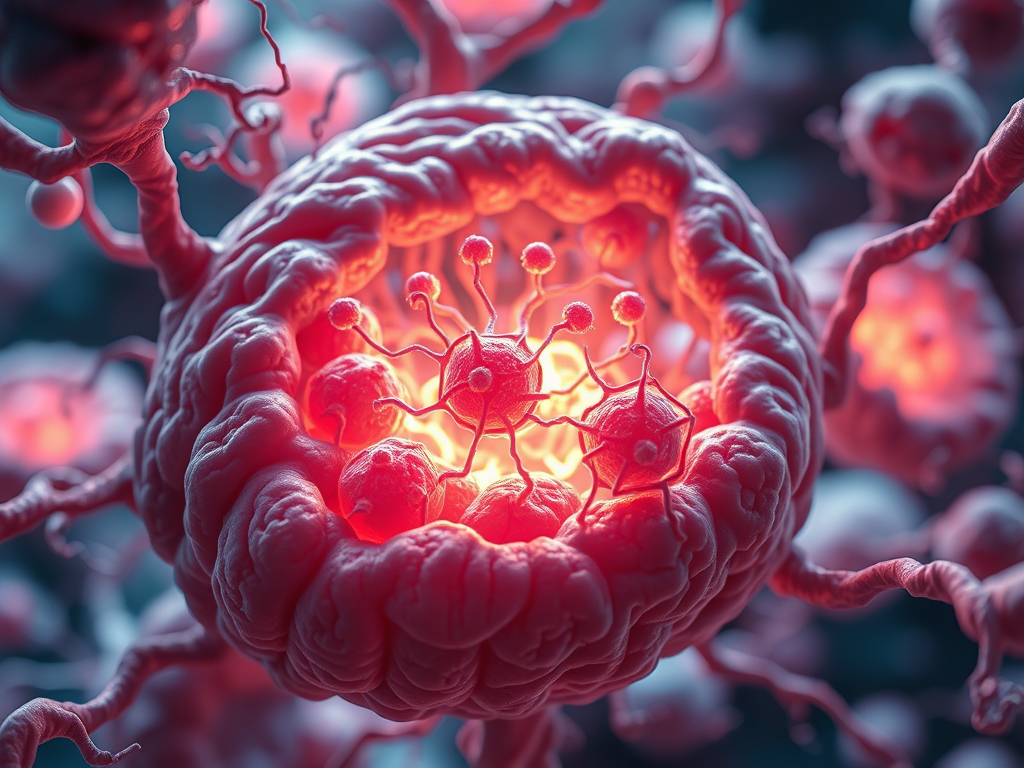
Morphogenesis involves the development of living organisms through cell growth, movement, and organisation into tissues and organs. This guide highlights key steps and applications, such as wound healing and lab-grown tissues, using examples and reflection prompts to illustrate purposeful biological structure. Visit Gwenin and Spiralmore for resources and explore the informal blog.
-
Molecular evolution examines DNA changes over time, explaining species origins, disease evolution, and life’s adaptations. This guide highlights essential concepts, tools, and applications, such as constructing gene family trees, tracking viruses, and developing new medicines. Visit Gwenin and Spiralmore for frameworks and collections, or explore the informal blog for a relaxed experience.
-
Genes are regulated by cells, determining their activation timing and usage. This guide explains genetic regulation for health, development, and its application in disease research, therapy design, and crop enhancement. Additionally, you can explore Gwenin’s frameworks, Spiralmore’s collections, and an informal blog for further insights.
-
Cells retain memories of past stressors like drought and infection through epigenetic mechanisms without altering DNA. This guide explains the significance of epigenetic memory for health and development and relates it to broader concepts such as resilience, learning, and design. Explore frameworks and informal blogs at Gwenin and Spiralmore.
-
Biofilms are microbial communities that collaborate and protect each other. This guide explores their formation, communication, and resilience in harsh environments. It includes real-world examples and reflection prompts, highlighting the teamwork at the microscopic level. Additionally, it offers resources from Gwenin and Spiralmore, along with an informal blog for exploration.
-
This guide delves into the importance of circadian rhythm, which regulates sleep, energy, mood, and metabolism. It explains how light, timing, and biology interact and how disruptions, like jet lag or stress, impact health. The content offers examples and reflection prompts to connect your inner clock with the external environment.
-
This guide offers a comprehensive overview of biology, exploring life from cells to ecosystems. It encourages curiosity about living organisms, their characteristics, and their interconnections. Key topics include cell types, genetics, evolution, and ecology, highlighting biology’s role in understanding life and fostering a sense of wonder and responsibility toward nature.
-
This content serves as a guide for understanding global warming’s significance across various dimensions. It comprises eight chapters linking science to action, culture, and emotion, covering topics from greenhouse gases to climate futures. Each module promotes systems thinking and community engagement through scientific insights and emotional prompts, emphasising climate as relational.
-
August saw significant growth across the network, with initiatives focused on accessibility, sustainability, and creativity. Highlights include the launch of How to Structure a Literature Review, new Access Trails UK modules, and the emergence of Bloggyness as a storytelling platform. Collaborative efforts foster a community-driven ecosystem promoting innovation and reflection.