

Burning Fields and Big Questions
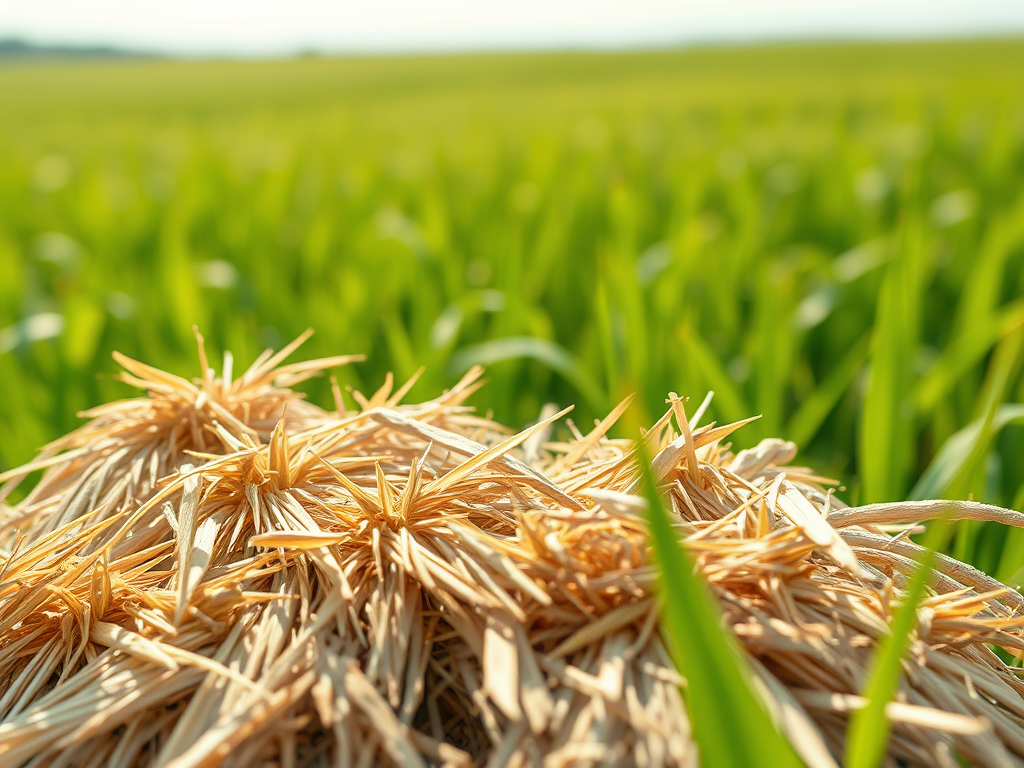
Imagine walking through a field after the harvest. The crops are gone, but what’s left behind—straw, husks, and stalks—is being set on fire to clear the way for next season. It’s a common scene across farming regions, but it’s also a major environmental problem, sending smoke and carbon into the air.
Now picture a different future: what if all that leftover plant stuff could be turned into packaging, furniture, even car parts? What if the trash we’ve been burning became the building blocks of a greener world?
That’s exactly what a team of scientists explored in a recent study. They wanted to find out if the stuff we throw away could actually become something valuable—and change the way we build, consume, and live.
Why This Really Matters
Right now, we’re drowning in plastic. Most of it is made from oil, lasts for centuries, and piles up in landfills and oceans. At the same time, farms all over the world are throwing away plant waste—stuff like wheat straw and rice husks—by the millions of tonnes.
This research connects those two problems with a big idea: use crop leftovers to make new kinds of materials. Materials that are strong, useful, and biodegradable. That’s not just smart science—it’s a recipe for a cleaner, more circular economy.
By turning “waste” into something useful, we can reduce pollution, give farmers a new income source, and help industries shift to sustainable alternatives.
The Scientists Behind the Idea
The team behind this project comes from India, where agriculture plays a huge role in the economy—and where agricultural waste is often seen as a burden rather than a resource.
They were driven by two things: the massive amounts of unused plant material going to waste, and the growing need for better, greener materials in packaging, construction, and beyond. They weren’t just thinking like scientists—they were thinking like change-makers.
They set out to prove that with the right mix of creativity, chemistry, and care, trash could become treasure.
Turning Plants Into Plastic (Sort Of)
First, they picked three types of waste that are easy to find and usually discarded: wheat straw, rice husk, and sugarcane bagasse (the fibrous stuff left after squeezing sugar out of cane).
Then they chose a material called PLA—a biodegradable plastic made from corn starch—to mix with the plant fibers. The idea was simple: bind the two together to create a new kind of biocomposite that could replace harmful plastics.
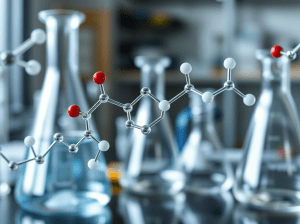
But it wasn’t as easy as tossing it all into a blender. They had to experiment with how much fiber to use, how to treat the surface so the fibers would stick better, and how to heat and shape the material just right. It was a bit like cooking—but with microscopes and heat presses.
Each version they made was tested for strength, flexibility, and how well it held up against water and heat.
The Winning Recipe
After all the testing, sugarcane bagasse came out on top. When mixed with PLA and treated with a simple chemical process, it created a material that was strong, water-resistant, and heat-tolerant—everything you want in a reliable, everyday product.
It could be moulded into plates, boxes, wall panels—even parts for vehicles. And best of all, it was entirely biodegradable and had a much lower environmental impact than traditional plastic.
This wasn’t just a nice idea anymore—it was a real, workable solution.
What This Could Change
This discovery could shake up multiple industries. Think about packaging companies replacing foam or plastic with farm-waste-based composites. Or building materials made from renewable crops instead of mined or petroleum products.
Farmers could start selling their leftovers as raw material, adding a new income stream. Factories could make products that are easier to dispose of without harming the planet. And governments could adopt greener policies by encouraging local production of bio-based materials.
Even for the average person, it means your food container or furniture could come from a sugarcane field instead of an oil rig—and still do the job just as well.
Not the End—Just the Start
While the lab results are promising, there’s still work to do. Making this material at scale means investing in new machines, setting up local production centres, and making sure the quality stays consistent.
There are also more questions to explore: Could other plants work better in different regions? How can we tweak the material to make it even stronger or cheaper? What else could we replace with this technology?
In short, this isn’t the final step—it’s a bold first one.
A Bigger Lesson in a Handful of Straw
This research is about more than just materials. It’s about the way we look at the world. It asks us to rethink what we throw away, to find value where we least expect it, and to let science serve communities and the planet at the same time.
It shows that sustainability isn’t always about high-tech solutions. Sometimes, it starts with a pile of straw and a little imagination. And in that sense, it’s a hopeful story—one where waste turns into wonder, and where even the smallest leaf has a second life waiting.
Summary for Everyone
This study looked at how farm waste—like rice husks and sugarcane leftovers—can be transformed into useful, green materials that can replace plastics. Scientists mixed plant fibres with a biodegradable plastic called PLA, then tested different combinations to see what worked best.
They found that sugarcane bagasse mixed with PLA made the strongest, most durable material. It’s water-resistant, heat-stable, and biodegradable—making it perfect for packaging, furniture, and more.
This breakthrough means we could start making everyday products from materials we usually throw away. Instead of burning crop leftovers and polluting the air, farmers could sell them to factories. Instead of using plastics that sit in landfills for centuries, industries could switch to something much cleaner.
It’s a small change with big benefits—for the environment, the economy, and people’s lives. And it shows that sometimes the best answers to our biggest problems come from the ground beneath our feet.
Further Reading & Resources
- Circular Economy Guide – Ellen MacArthur Foundation
- UNEP on Sustainable Plastics
- PLA Bioplastics Explained
- Agro-Waste Innovations – Journal of Cleaner Production
Keywords for Discoverability
- Sustainable biocomposites
- Sugarcane bagasse
- Circular economy materials
- Agricultural waste reuse
- Bio-based plastics
- Green packaging solutions
- Renewable resources
- Compostable materials
- Climate-friendly innovation
- Waste-to-resource
- PLA (polylactic acid)
- Eco-friendly composites
- Rural income opportunities
- Sustainable design
- Farm-to-product innovation
If you’d like to share your paper for thoughtful consideration, we welcome work that bridges disciplines and offers accessible insight into emerging questions.
You’re always welcome to pop over to Gwenin for a selection of frameworks, or pop over to Spiralmore’s collections. You’re also welcome to explore our more relaxed corner: the informal blog.
 Deconvolution